
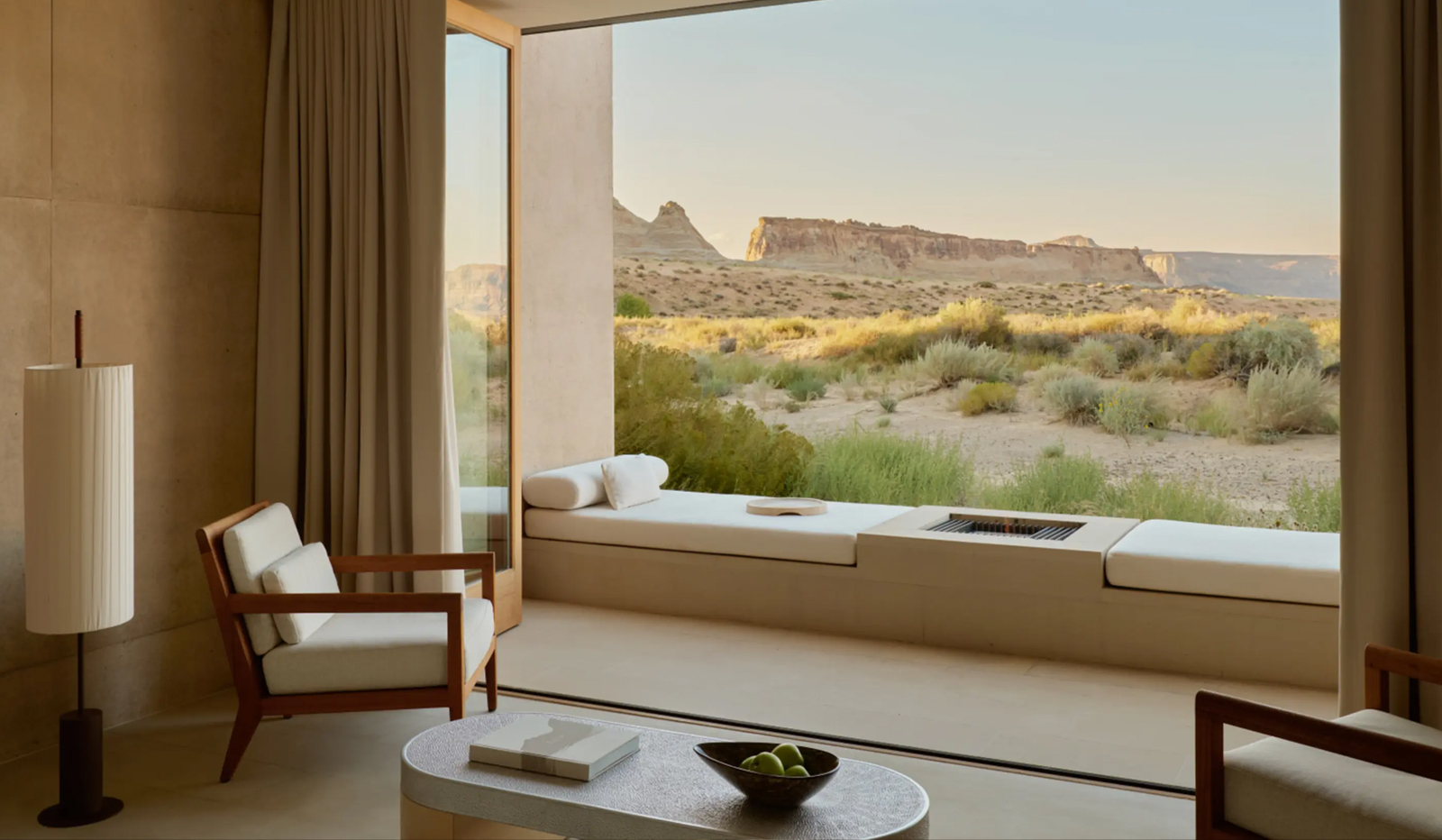
Photo Credit
Walk into almost any memorable hotel and you’ll notice something difficult to describe. The lighting feels intentional. The materials feel considered. The atmosphere feels consistent. Every detail contributes to the same story.
That’s because the world’s best hotels don’t separate branding from interior design. They understand that one shapes perception while the other shapes experience.
At AM-76, we see these disciplines as two halves of the same conversation. One creates the promise. The other fulfills it.
What Is Hotel Branding?
Hotel branding is the emotional framework behind a destination. It defines how a place should feel long before a guest ever walks through the door.
Branding answers questions like: Who are we? Why should guests choose us? What experience are we promising? How should every touchpoint reinforce that promise?
A great hotel brand isn’t defined by its logo. It’s defined by the emotional response people have when they encounter it — online, in person, and in memory.
What Is Hotel Interior Design?
Interior design transforms that promise into something guests can experience with their senses.
Everything from material selection and lighting to furniture, spatial flow, and atmosphere influences how a destination feels the moment someone arrives.
It supports the personality of the brand while making every interaction feel natural and effortless.
Where Projects Begin to Fall Apart
One of the most common mistakes in hospitality development is treating branding and interiors as separate phases of the same project.
The website promises one experience while the lobby delivers another. The photography tells one story while the materials tell a different one.
None of the individual pieces are wrong. They’re simply speaking different languages.
The Best Hospitality Brands Design One Story
The most celebrated hospitality destinations succeed because every creative discipline supports a single brand narrative. Brands like Aman and Faena don’t treat architecture, interiors, service, and identity as isolated choices — they design them as one experience.
The same is true of destinations like JW Marriott Crete Resort & Spa and Minos Beach Art Hotel, where architecture, art, landscape, and interiors are guided by a clear brand story rather than assembled after the fact.
When branding shapes the experience from the beginning, guests don’t just stay somewhere. They enter a world that feels complete.
Hospitality Is About Continuity
Hospitality isn’t experienced as a series of isolated moments. It’s experienced as a continuous story — from the first Instagram post or website visit to the lobby interaction, the room, the dining, and the memory guests carry home.
Creating memorable places means aligning branding and interior design under one vision so every detail reinforces the same feeling.
At AM-76, we believe the strongest hospitality projects begin when brand strategy and spatial design move together from day one.
Because guests rarely remember individual design details.
They remember how the entire experience made them feel.
And that’s where branding and interior design become one.